
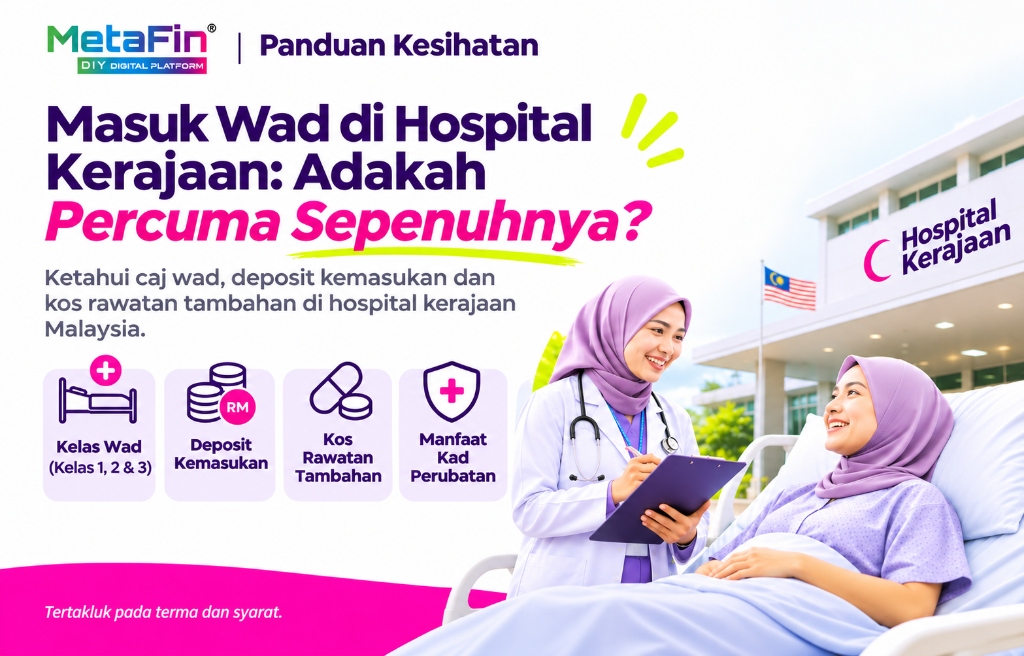
Malaysia is globally recognized for having one of the most accessible and heavily subsidized public healthcare systems in the world. Administered under the auspices of the Ministry of Health (Kementerian Kesihatan Malaysia – KKM), public tertiary hospitals provide vital medical, surgical, and emergency care to millions of citizens every year at nominal nominal fees. A ubiquitous perception among many Malaysians is that seeking medical admission at a government hospital is one hundred percent completely free under all circumstances.
While basic outpatient consultations and general third-class ward accommodations are subsidized up to 98% by the federal government, assuming that complex surgical interventions, modern medical implants, specialized pharmaceuticals, and executive first-class wards incur zero out-of-pocket expenses is a critical misconception. Under the Fees (Medical) Order statutory framework, understanding what is truly covered and how a supplemental medical card shields your family against financial distress is vital. Secure your family healthcare plan through registered corporate portal MetaFin Protection Portal.
1. The Statutory Fee Structure: Class 1, Class 2, and Class 3 Wards
Government hospital inpatient admissions in Malaysia are legally categorized under three primary ward tiers, each carrying distinct deposit requirements and daily operational tariffs:
A. Class 3 Wards (General Subsidized Care)
- Daily Bed Tariff: Approximately RM3.00 per day for standard general ward accommodation.
- Admission Deposit: Typically between RM20.00 and RM30.00 upon registration.
- Government Subsidy: Highly subsidized by taxpayer funds. General diagnostic blood screenings, standard x-rays, and baseline nursing care are largely absorbed within the nominal discharge bill.
B. Class 2 Wards (Semi-Private Accommodation)
- Daily Bed Tariff: Ranging between RM20.00 and RM40.00 per day (typically 2 to 4 beds per air-conditioned room).
- Admission Deposit: Ranging from RM150.00 to RM300.00 upon admission.
- Co-Payment Requirements: Diagnostic imaging (CT scans, MRI investigations) and specialized laboratory assessments attract nominal co-payments.
C. Class 1 Wards (Private Single and Executive Rooms)
- Daily Bed Tariff: Ranging from RM80.00 to RM150.00 per day for executive single rooms equipped with attached washrooms.
- Admission Deposit: Mandates an upfront deposit of RM500.00 to RM1,200.00 upon admission.
- Full Professional Fees: Patients electing Class 1 admission are billed under commercial government fee tariffs, including daily specialist physician consultation fees, operating theater surcharges, and comprehensive anesthesia fees.
2. Comprehensive Hospital Admission Cost Analysis
| Medical Component | Class 3 Ward (General) | Class 1 Ward (Executive Room) | Full Paying Patient (FPP) Scheme |
|---|---|---|---|
| Daily Room & Nursing Care | RM3.00 / day | RM80.00 – RM150.00 / day | Commercial rates (RM120 – RM250 / day) |
| Initial Admission Deposit | RM20.00 – RM30.00 | RM500.00 – RM1,200.00 | RM3,000.00 – RM5,000.00 upfront |
| Specialist Consultation Fees | Fully Subsidized (Nominal) | Billed per specialist visit | Statutory specialist tier billing |
| Orthopedic Implants & Stents | Patient pays actual implant hardware cost | Patient pays actual implant hardware cost | Full commercial hardware price |
| High-Tech Cancer Targeted Therapy | Subject to hospital pharmacy quotas | Out-of-pocket or supplemental coverage | Full unsubsidized pharmaceutical cost |
3. Three Critical Expenses That Are NOT Covered in Government Hospitals
Even when admitted to a public healthcare facility, patients and their families frequently encounter substantial medical invoices that require immediate personal financing:
1. Surgical Hardware, Implants, and Medical Prosthetics
While the surgeon’s labor and operating theater facilities are heavily subsidized, the physical hardware implanted into the human body is not fully absorbed by hospital operational budgets. For instance, drug-eluting cardiac stents (RM4,000 to RM8,000 each), titanium orthopedic bone plates for fractured limbs (RM3,000 to RM7,000), intraocular cataract lenses, and specialized prosthetic joints must be purchased directly by the patient’s family from third-party biomedical suppliers.
2. The Full Paying Patient (FPP) Scheme
To retain top medical specialists and mitigate public healthcare brain drain, major KKM tertiary hospitals (such as Hospital Selayang, Hospital Putrajaya, and Hospital Kuala Lumpur) operate the Full Paying Patient (FPP) initiative. Under FPP, patients can choose their personal treating specialist consultant, enjoy executive Class 1 private rooms, and schedule prompt elective surgical dates without enduring months on general waiting lists. However, FPP admissions operate on commercial fee schedules, requiring thousands of ringgit in personal funds or an active medical card Guarantee Letter.
3. Novel Biologic Medications and Targeted Oncology Therapies
Advanced pharmaceutical breakthroughs—such as immunotherapy biologics for cancer, specialized anti-viral compounds, and advanced autoimmune therapies—are often excluded from the standard KKM National Essential Medicines Formulary (Blue Book). When public hospital pharmacies deplete annual subsidized quotas, patients must self-fund these life-saving drugs at commercial prices exceeding RM5,000 to RM15,000 per monthly cycle.
4. Real-World Case Study: Emergency Cardiac Stenting
Mr. Anand, a 46-year-old technician, suffered acute chest pain and was rushed to a premier government cardiac referral hospital in the Klang Valley. The cardiologist diagnosed severe coronary artery blockage requiring emergency percutaneous coronary intervention (angioplasty):
- Subsidized Hospital Bill: The basic bed tariff for 5 days in the cardiac ward and initial coronary angiogram cost less than RM250.00 under KKM subsidies.
- The Uncovered Expense: The procedure required two specialized drug-eluting stents. The hospital required Mr. Anand’s family to settle the hardware implant invoice of RM9,600.00 with the medical vendor before discharge.
- Outcome: Because Mr. Anand possessed a comprehensive medical protection card, his corporate underwriter issued a direct reimbursement settlement, preventing his family from draining their emergency savings.
5. Why a Complementary Medical Card is Vital Even If You Rely on Public Hospitals
Relying solely on public healthcare without a financial backstop leaves individuals vulnerable during critical health episodes. A modern private medical card provides three decisive strategic advantages:
- Government Hospital Daily Cash Allowance: High-tier medical cards pay an automatic cash incentive (typically RM50 to RM200 per day) directly into your bank account for every day you choose to be hospitalized in a government ward, offsetting lost wages.
- Cashless Private Emergency Option: If public specialist waiting queues for urgent diagnostic scans (like PET-CT or cardiac angiograms) extend over months, your medical card allows immediate, cashless admission to leading private medical centers.
- Comprehensive Post-Hospitalization Coverage: Reimburses diagnostic tests, outpatient cancer chemotherapy, kidney dialysis, and follow-up specialist consultations without depleting household savings.
6. Frequently Asked Questions (FAQ)
1. Does a government hospital accept private medical insurance Guarantee Letters (GL)?
Yes. Tertiary government hospitals and university medical centers (such as PPUM and HUKM) accept corporate and insurer Guarantee Letters for Class 1 and Full Paying Patient (FPP) admissions, allowing cashless billing settlement.
2. What documents are required for admission to a Malaysian government hospital?
Patients must present their original Malaysian MyKad (or passport for foreign nationals), a formal medical referral letter from a clinic or general practitioner, and an initial cash/card deposit matching the elected ward category.
3. Are emergency room treatments at government hospitals charged commercial rates?
No. Triage and emergency room treatment for life-threatening acute conditions (Red Zone) are provided immediately to all patients regardless of initial payment ability, with nominal fees settled upon stabilization.
7. Detailed Statutory Fee Breakdown: Operations and Diagnostic Imaging
To fully grasp the financial exposure when admitted to a government hospital, patients should review the specific schedule of fees established under statutory gazettes. Diagnostic radiological imaging and operating room surcharges vary based on the ward admission classification:
- Computed Tomography (CT Scan): While general third-class ward patients pay nominal subsidized fees (typically RM30 to RM50), Class 1 private patients are billed commercial laboratory rates ranging between RM250 and RM600 depending on anatomical complexity and intravenous contrast medium usage.
- Magnetic Resonance Imaging (MRI): Under Class 3, the subsidized copayment is approximately RM50 to RM100, subject to clinical specialist prioritization. Class 1 admissions incur bills between RM450 and RM900.
- General Anesthesia and Operating Theater Tariffs: Major surgical procedures requiring prolonged general anesthesia incur tiered operational facility surcharges. While subsidized for general ward occupants, elective Class 1 patients bear procedural facility invoices ranging from RM800 to RM2,500.
- Pathology Blood Work and Histopathology: Specialized tumor marker screenings, molecular genetic assays, and autoimmune blood panels often require out-of-pocket settlement if private laboratories are contracted for specimen analysis.
8. Step-by-Step Strategic Checklist When Admitted to a Government Hospital
When you or a family member requires inpatient admission at a public medical institution, following this strategic protocol ensures you avoid unexpected administrative complications:
- Obtain Official Diagnostic Documentation: Request a comprehensive medical report and discharge summary signed by the treating specialist consultant detailing the primary diagnosis, surgical interventions, and hardware utilized.
- Retain Original Biomedical Invoices: Any orthopedic implants, titanium mesh, drug-eluting stents, or specialized surgical consumables purchased from third-party vendor representatives must be accompanied by original official tax invoices and payment receipts.
- Submit for Direct Reimbursement: Forward the official hospital discharge bill alongside the third-party hardware vendor receipts to your licensed insurance intermediary at MetaFin to initiate immediate claim reimbursement under your supplemental medical policy.
Official insurer rates & save up to 55% NCD